Raindance by Dave & Tems: Meaning Beyond the AI Trend
If you found Dave and Tems' “Raindance” through an AI video, the song came first. The edits replace performers or introduce other characters into its music-video imagery; they don't explain the lyric. Azteca Laguna's September 2026 report describes that use of AI. Underneath the meme is a love song with a less tidy question: what happens when attraction is clear, but trust still needs work?
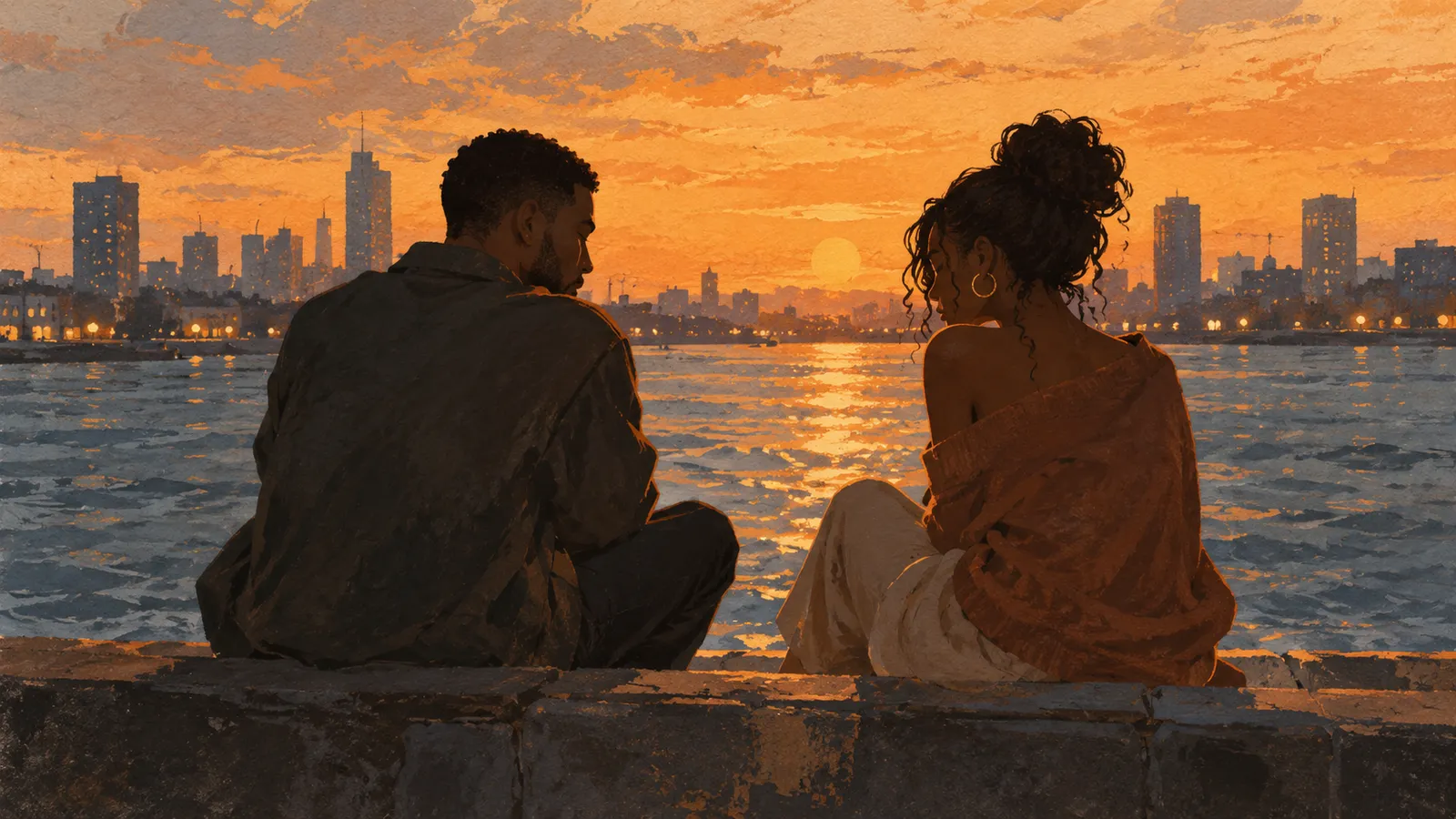
“Raindance” reads as a movement from flirtation and emotional distance toward the possibility of commitment. Dave supplies scenes and promises; Tems gives desire a voice that also asks for a response. The chorus sounds certain. The verses give you reasons to listen to that certainty more carefully.
Why the love song starts with distance
The opening puts us in a social setting, but the person Dave addresses is quiet. His narrator notices hurt, tries charm, and describes someone emotionally withdrawing before the evening has properly begun. Later, Tems' passage brings concealed feelings and a request for closeness into view. Dave's later verse raises marriage and the possibility of doing things differently from what he saw growing up. Those are the main turns in the lyric available on Shazam.
That sequence matters. If you only hear the hook, you might take the song as uncomplicated mutual devotion. Start with the opening instead, and the declarations become attempts to cross a gap. A person can want someone and still be guarded with them.
Dave's confidence doesn't settle everything for the listener. He can tell us how he reads the other person's feelings, but his assurance is still a character's assurance. The useful question is whether the other voice confirms it, complicates it, or asks him to earn it.
What Tems changes in the story
Tems' contribution makes the relationship feel less like a portrait drawn by one admirer. Her passage allows wanting and hesitation to occupy the same space. That gives the listener another position from which to hear Dave's promises.
You can read the two voices as partners in a conversation without treating every handoff as a literal reply. A duet can create the feeling of exchange through contrast, repetition, and placement. Here, the emotional question becomes mutual: can each person say what they want clearly enough for the other to answer?
It would be a leap to turn that reading into a claim that Dave and Tems are describing their own relationship. The song gives us speakers. Their real lives require separate evidence.
The images are smaller than the title suggests
“Raindance” sounds like a promise of sweeping weather symbolism. Much of the lyric's work happens at a more ordinary scale: traffic light, a room, a phone, a shared meal, an imagined ring. You don't need a secret code to make those details useful.
Brake lights: a scene before a symbol
The red light on skin has a visible cause: brake lights. Start there. It puts the encounter in a specific space and gives the listener something to picture. Reading the red as danger or embarrassment is possible, but the color alone can't prove either feeling. An image can be vivid without being an encoded warning.
Checking in while checking out
The contrast between “checked out” and “checked in” compresses emotional absence and physical arrival into one phrase. Its force comes from the mismatch: being somewhere together doesn't mean both people are present in the relationship. For more on hearing how a double meaning works, see our guide to analyzing rap lyrics.
A ring that starts as a joke
The engagement wordplay turns on “ring,” moving between sound and jewelry. The surrounding reflection on marriage gives the joke weight. My reading is that commitment becomes more than a display of what the narrator can afford: it offers a way to imagine a different future.
That doesn't make a promise into an accomplished change. The distinction is part of the song's interest. You hear a future being proposed, and you get to decide how persuasive the proposal feels.
Why the chorus feels more certain
The repeated “I love you” pares the relationship down to its simplest declaration. Against the detail and friction of the verses, that repetition can feel like reassurance: something the speakers return to when explanation gets messy.
There are two plausible ways to hear it. The refrain may express a bond strong enough to hold the hesitation around it. Or it may be the certainty the speakers are reaching for. The verses keep both readings available; they don't document a final resolution.
On your next listen, follow the move from guardedness to invitation to a proposed future. Then return to the hook. Does the declaration feel earned, hopeful, or a little of both? That's a more useful listening question than deciding in advance that every love song must end happily.
What does “Raindance” mean?
The title word doesn't appear in the Shazam lyric. A reading of the title as an appeal for renewal can fit the movement toward connection, but it remains a reading. Neither the lyric listing nor the official video announcement provides an artist explanation of the name.
I'd keep the title open rather than turn it into a story about a particular ritual or a claim about Nigerian tradition. Those explanations would need evidence beyond a title and a filming location. Our four-layer guide to interpreting lyrics makes the same distinction: an association should support the words you have, not supply words that aren't there.
Where the video and AI trend fit
Universal Music Canada's announcement confirms that the official video was released on January 9, 2026, and filmed in Lagos, Nigeria. It identifies the song as part of The Boy Who Played the Harp and links to Dave's official music video.
The AI trend adds a new way of encountering the song. A short edit can give you an image and a memorable refrain while leaving out the hesitation that surrounds it. If the clip brought you here, listen to the whole track once before choosing a meaning. The emotional movement is easier to hear when the verses have room to answer the chorus.
Try a reading of your own
Write one sentence for what Dave's narrator wants, one for what Tems' voice asks for, and one for what has changed by the end. If the last sentence describes a hope rather than a completed event, keep that distinction.
For a starting point, use the lyrics analyzer to explore themes, mood, and core meaning, or choose a detailed analysis for narrative and imagery. Check its suggestions against the song. A useful interpretation helps you hear more; it still needs evidence when it claims to know what the artists intended.
FAQ
Is “Raindance” a happy love song?
It can feel affectionate and hopeful while leaving trust unsettled. The contrast between the chorus and the verses is why calling it simply happy or sad misses some of its tension.
Is the Raindance AI trend the song's meaning?
The trend is a later visual use of the song. It can shape your first impression, but an interpretation still needs to account for the full lyric.
Have Dave and Tems confirmed this interpretation?
This is a close reading, not a reported statement of their intent. The sources linked here establish the lyric and official video context; they don't confirm the emotional interpretation or the title explanation.
Start Your Song Lyrics Review Journey Today
Join thousands of music lovers who are mastering the art of song lyrics analysis.